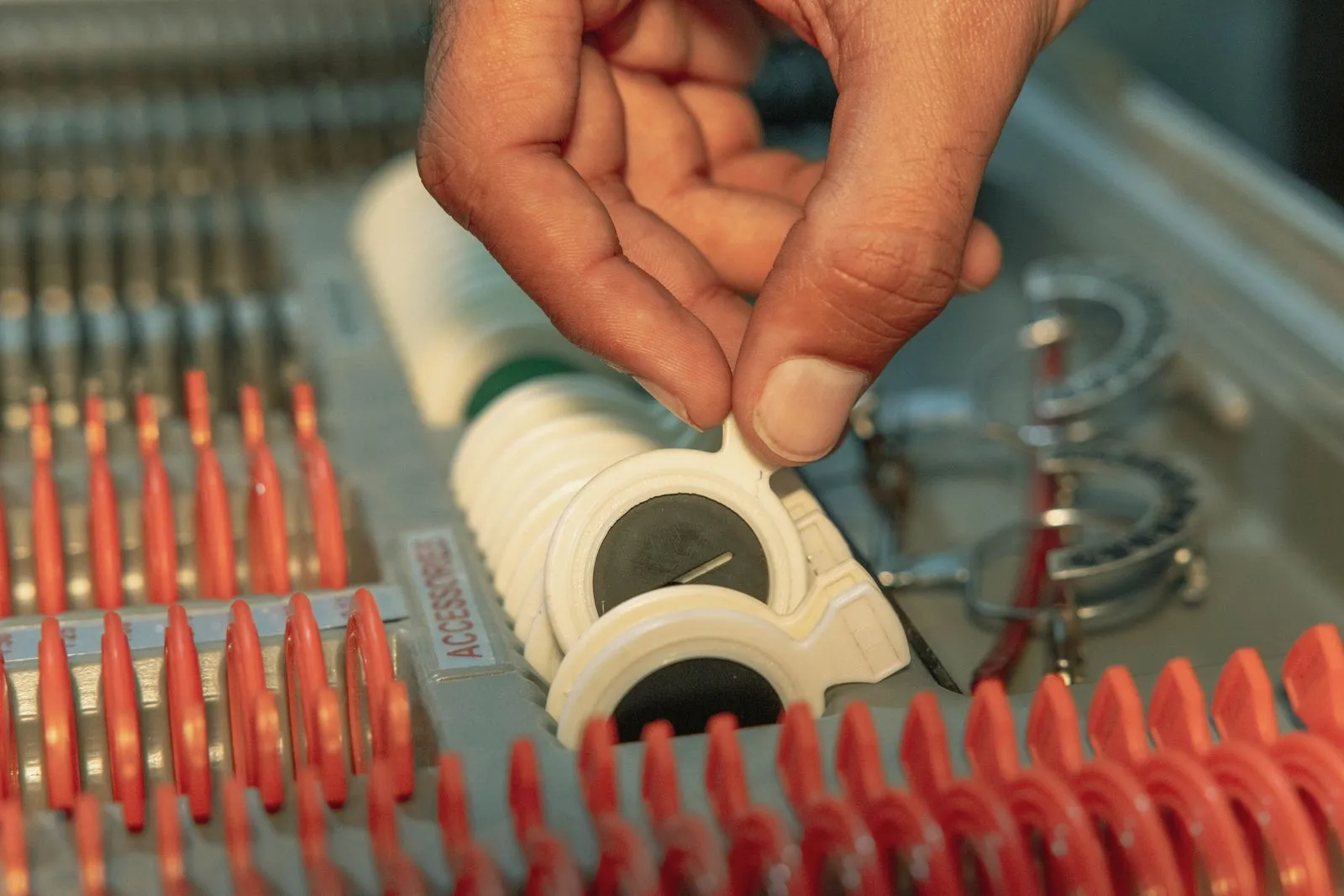
An eye test is a chance to check how clearly you see and assess the health of your eyes. Your optician may ask about your vision, medical history, and any changes you have noticed before carrying out a series of checks. The exact tests can vary depending on your needs. Knowing what to expect—and what to bring—can help you feel prepared and make it easier to discuss any concerns.
Before the appointment
Make a note of any changes in your sight, such as blurred vision, headaches, difficulty reading, or trouble seeing at night. Include when the changes began and whether they affect one or both eyes. Tell the optician about eye discomfort, flashes, floaters, or other symptoms too. Sudden changes or severe symptoms may need prompt attention rather than waiting for a routine appointment.
Bring your current glasses or contact lenses, along with details of any medication and relevant health conditions. If you wear contact lenses, ask the practice whether you should remove them before the appointment; this can depend on the checks planned. Bring any previous prescription or eye-test information you have, and let the practice know if you need support with access, communication, or mobility.
Questions and vision checks
The appointment often starts with questions about your general health, family history, work, hobbies, and how you use screens. Your answers help the optician understand the demands on your eyesight and identify issues worth checking. Be specific about when symptoms occur—for example, while driving, reading, or working at a computer—and mention whether your current glasses still feel comfortable and effective.
You may be asked to read letters or symbols from a chart, first with each eye and then with both. The optician can use lenses in a frame to compare different strengths and assess which option gives you clearer vision. You might also have checks of close-up vision, eye coordination, or focusing. These tests are straightforward, and you can ask for an explanation or a pause at any point.
Checks of eye health
An eye test may include an examination of structures such as the front of the eye and the retina. Depending on your needs, the optician may use a bright light, a microscope-style instrument, or imaging equipment. Some checks involve air or a gentle touch to measure pressure inside the eye. Tell the optician if you are uncomfortable or have difficulty keeping your eyes open.
Eye drops may be offered to widen your pupils so the optician can see more of the back of your eyes. They are not needed at every appointment. If drops are used, your near vision may be blurry and your eyes may be more sensitive to light for a while. Ask what to expect and whether you should arrange transport or bring sunglasses, especially if you need to drive afterward.
Results and next steps
At the end, the optician should explain the findings and answer your questions. If you need glasses or a prescription change, ask what the prescription means and when to wear the recommended lenses. If no correction is needed, ask when to book your next routine check. The timing can depend on your age, health, vision, and the optician’s advice.
If a check suggests that you need further assessment, ask what the next step is, how soon it should happen, and who will arrange it. Before you leave, make sure you understand any advice about symptoms to watch for or changes to your daily habits. You can also ask for your results or prescription in a format that is easy for you to keep and refer to.
A little preparation can make an eye test more useful: bring your glasses, share relevant health details, and describe any vision changes clearly. You do not need to know the names of the tests; ask questions whenever something is unclear. Contact Northlight Opticians to arrange an appointment or check what to bring.